


- What needs to be recognized (basis for engagement) : is it participation, contribution, belonging, raw talent, innovative talent, particular abilities, exceptional performance, ... ?
- How to identify / measure the items that need to be recognized ? If, say, participation or contribution can be measured in terms of quantity and quality, measuring an innovative skill is almost impossible. In this particular case (and similar ones), HR teams will need to innovate themselves and devise new means for identifying particular abilities or innovative talent. For instance, a marketing expert that gets an unusual high number of "likes" (or its corporate equivalent) has probably a new idea or a particular ability. HR teams should be able to poll the "fans or followers" (or their corporate equivalent) of the marketing expert and identify the new talent or ability;
- Who will be responsible for recognition : leaders & managers ? peers ? the whole organization through a specific social intellegence tool ? a given community members ? Working on measurement and responsibility for recognition is probably a huge opportunity for impact of HR on strategy development
- When (if ever) is formal evaluation needed ?
- What type of reward will be tied to a particular type of recognition : financial ? reputation ? influence ? professional development ? social engagement ?
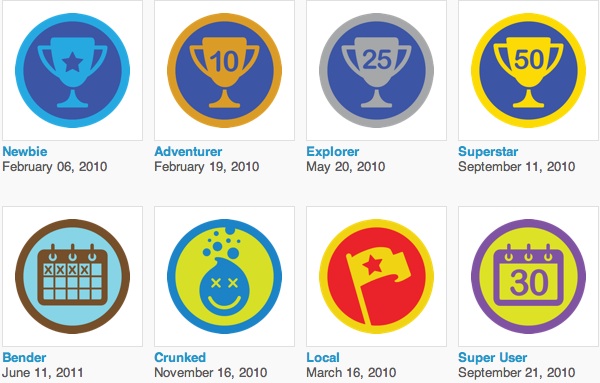
- How will recognition translate into the existing corporate social network ? Badges, recomendations, other symbols ?

Sorry Luis, the comments below were designed for Ross' hack on gaming rather than your own. Though they do apply here too.
Can I also add that I simply don't see the problems you do in today's talent management systems. They're absolutely not static or heavy and not built on competencies unless you want them to be. And I don't see why you don't think they foster innovation. Surely including behaviours, competencies and / or outcomes focused on innovation does just that? Why should badges or recommendations be any better than this?
I do agree of course that further improvement is available. For example I love Google's internal system G Whiz which covers much of the requirement from a 'new recognition system' you describe. See: http://strategic-hcm.blogspot.com/2010/04/google-collaboration.html. It's still not gaming though...
- Log in to post comments

- Log in to post comments
Gaming is definitely something we need to look at seriously. But surely one solution to rewarding management behaviours is to make the existing forms of control work - ie using existing forms of recognition, rewarding on competencies, outputs etc. Gaming could result in as many if not more problems than these existing forms of incentivisation. The best argument I've seen for this is here: http://www.ht2.co.uk/ben/?p=355. How would you ensure that gamification of management performance evaluation is intrinsic to the activity, and fun?
- Log in to post comments

Thanks for your post, Luis and thanks also for adding ideas that could serve to improve rating systems to simplify so that people understand ways to grow, diversify so that the culture at work is respected in the culture in promoted positions, and so that rating tools begin to double as growth tools.
Just yesterday I was invited to a lunch where top medical researchers showed me specific ways that medical science in that “well –respected” institute rates unfairly so that people who speak out, invite change, or suggest innovation are rated out to save the moneyed positions that rate what's most like themselves. If money and power have corrupted rating systems – and people cling to unchecked conventions in response, how will your innovation help?
Am encouraged and curious to see more about how you’d suggest folks take that first step you listed here. I'd love to see a bit more of how it would simplify, diversify, and increase genuine innovation. How would your hack, for instance, this impact what I heard yes, that adds to corruption, ignores innovation from a wider talent pool, and appears unaware of any problems in rating systems which hold back improvements?
- Log in to post comments
- Log in to post comments
You need to register in order to submit a comment.