


Far better to glean and develop diverse talents that will contribute wealth to whole team efforts, and then harness multiple gems in order to enhance a shared crown. Can you see why the brain literally builds trust, courage and playful experimentation parts when you shift from expecting a hierarchy of talents to design rating approaches that cull brilliant parts from diverse wholes?
How can we rate without leaving behind brilliance? Research shows that folks favor highly what is most similar what already exists, and what they already recognize as familiar. Unfamiliar initiatives and talents get passed over if we believe the brain's proclivities. Yikes - sound like a way to rate for brilliant innovative and novel initiatives? Or do most rating systems invite practices that pass by novel opportunities?
Use a rating system created by men, favored by men, and fostered by men - it likely does not fit women's ways of knowing or expressing knowledge. The world craves a balance that's as necessary as two oars to row a boat. One oar spins a boat in circles! When you rate in traditional formats, you shrink the wider pool of amazing talents, intelligence diminishes and that human zest for joining in wanes. Innovation suffers because gifted people drop off, yet it doesn't have to be that way.
People - who come to the table with brilliant parts - get discouraged when you rate a few up and a few down. For many years I studied assessments as they work in groups and individuals. In many cases, talented people drop out and workplace toxins result from the very tests that espouse excellence. Outcomes suffer through a lack of brainpowered perspectives and some of your sharpest players leave with a doomed sense that rich new vines were pruned before they were watered.
Simply stated - why carry status quo ratings into innovative initiatives - since many conventional evaluations contribute to systemic toxins that follow?
One of my peers in the doctoral program, a much valued leader - who many looked up to for his brilliant ideas, was failed and left the PhD program a broken man. Those close to this innovative leader often benefited from his revolutionary ideas for renewal and especially from his genuine care for people. We discovered at the end of his third year, that Rick had challenged a program director’s leadership finance policy, and was failed in spite of the fact his dissertation related more to mentorships than money. Several faculty protested, but the director's assessment stood.
That experience led me to look into the rating process' accuiracy, and to design alternative ways to ensure that valid evaluations doubled as learning tools for genuine growth of a novel idea.
What I found related to bias and ratings astonished me, and I concluded that research suggests a holistic mindset to transform evaluations into a solidly stated growth paradigm. Innovators across all fields would opt for a growth goal to facilitate each participant’s success. Sound like a collaborative model with possibilities for your innovative development?
The status quo systems (such as rating a few top entries) go unquestioned - at the expence of letting go of amazing talent. Chris is facilitating the pilot project so that people from unique perspectives - are throwing incredible talents into the ring! THANKS CHRIS - you set the stage for a very new kind of leader possibilities! Bravo!
Why create rating formats that truncate good talent? Why not harness the richest gems through a new (more diverse and inclusive) form of rating? Why not let go of old rating status quos in favor of a newly designed way to harness the best talent and support it to the peaks in collaborative ways!
For each mini-hack recently listed in the pilot project, for instance, I mined for the gems locked into an innovator's main idea. Then I rated those main idea gems at the top of the heap - if they contributed wealth to keen inventions we are after.
Other than sheer common sense (which actually is intrapersonal intelligence) there's solid neuro research to show why cutting down an entry (or raising up a few only) works less well, especially at the inception stages. It may take a wider set of online tools to rate for that wider pool of talents, but luckily these tools are available.
For instance Adobe Connect would give real time innovator group collaboration, guest input, real time software demos, document collaboration, and brief statements by participants about what gem they can offer the whole to STACK THE DECK even more.
Here’s how I rate cool wisdom perks from 25 Innovative leaders here in the MIX who are helping Chris Grams to lead a new hackathon pilot! (These are rated as originally listed in the pilot site and none is topped by another purposely.
Instead all were found to hold highly valued gems that seemed vital to a project we’d be honored to work together to complete, using our unique offerings. Below, I named and showcased one key 5-STAR-GEM, selected from each innovator's unique offering. In each case the selected gem earned a 5-star-rating for its added wealth to the MIX initiative:
1. Deborah Mills-Scofield suggests the project - apply classic virtues in concrete ways to design innovative business practices. (Rated - 5 STAR + BECAUSE WE NEED THIS UNIQUE PART)
2. Anish Kumarswamy suggests the project challenge the work from diverse angles to improve the outcomes. (Rated - 5 STAR + BECAUSE WE NEED THIS UNIQUE PART)
3. Ellen Weber (that’s me) suggests using new brain discoveries as project tools to transcend all status quo systems. (Rated - 5 STAR + BECAUSE WE NEED THIS UNIQUE PART)
4. Josh Allan Dykstra suggests the project include more visible value and support of people strengths and differences. (Rated - 5 STAR + BECAUSE WE NEED THIS UNIQUE PART)
5. Paul Higgins suggests the project – build a unique idea, factor in respect for differences, offer a nobler cause to shoot for together. (Rated - 5 STAR + BECAUSE WE NEED THIS UNIQUE PART)
6. Alyson Huntington-Jones suggests the project create an aha together – by showing and selling - how model ecosystem concept supersedes the old. (Rated - 5 STAR + BECAUSE WE NEED THIS UNIQUE PART)
7. Chris Grams suggests the project cut out bureaucracy by engaging bottom up ratings of leaders in a fair and communicative manner for new growth. (Rated - 5 STAR + BECAUSE WE NEED THIS UNIQUE PART)
8. Terri Griffith suggests the project replace the notion of competition with an integration that’s reached through skilled negotiation. (Rated - 5 STAR + BECAUSE WE NEED THIS UNIQUE PART)
9. Lisa Haneberg suggests the project facilitate smart people to love one another in ways that eliminate unhealthy control issues. (Rated - 5 STAR + BECAUSE WE NEED THIS UNIQUE PART)
10. Alex Perwich suggests the project identity positive shared values and help people to find their purpose for moving these forward together. (Rated - 5 STAR + BECAUSE WE NEED THIS UNIQUE PART)
11. Simon Walter suggests the project enable teams to approve new hires, and ensure the culture becomes the entire team’s responsibility . (Rated - 5 STAR + BECAUSE WE NEED THIS UNIQUE PART)
12. Aaron Anderson suggests the project challenge traditional hierarchies and encourage bottom-up rather than top-down leadership structures and patterns. (Rated - 5 STAR + BECAUSE WE NEED THIS UNIQUE PART)
13. Alberto Blanco suggests the project share compelling stories of hope and that contain values to tackle new era. (Rated - 5 STAR + BECAUSE WE NEED THIS UNIQUE PART)
14. Andres Roberts suggests the project increase shared values through listening more, openness, researching more, and risking new ventures that differ. (Rated - 5 STAR + BECAUSE WE NEED THIS UNIQUE PART)
15. Susan Resnick West suggests the project open the books, including the systems, data and processes, in interest of communities of passion. (Rated - 5 STAR + BECAUSE WE NEED THIS UNIQUE PART)
16. Michele Zanini suggests the project create a far richer view of people, interests and skills by opening up the process of passion/skill attribution much like IBM did in Fringe. (Rated - 5 STAR + BECAUSE WE NEED THIS UNIQUE PART)
17. Aaron Anderson suggests the project avoids cementing the new status quo, but enable chaotic times where change can occur. (Rated - 5 STAR + BECAUSE WE NEED THIS UNIQUE PART)
18. Alberto Blanco suggests the project embrace ignorance in the interest of opening to new and different ideas presented. (Rated - 5 STAR + BECAUSE WE NEED THIS UNIQUE PART)
19. Mix Admin suggests the project build more and deeper relationships, eliminate complexity in structures, facilitate the creation of useful knowledge. (Rated - 5 STAR + BECAUSE WE NEED THIS UNIQUE PART)
20. Micki Komori suggests the project actively and aggressively develop voice-of-the-customer-tools that lead to new knowledge and help customers. (Rated - 5 STAR + BECAUSE WE NEED THIS UNIQUE PART)
21. Paul Higgins suggests the project encourage more experimentation (and allow for mistakes within agreed upon boundaries) through more diversity of input. (Rated - 5 STAR + BECAUSE WE NEED THIS UNIQUE PART)
22. Madhusudan Rao suggests the project give team members a say in project manager selection, rather than have manager select the team. (Rated - 5 STAR + BECAUSE WE NEED THIS UNIQUE PART)
23. Silva Colombo suggests the project encourage positive boldness in a social and constructive way. Create a virtual box to collect more diverse contributions. (Rated - 5 STAR + BECAUSE WE NEED THIS UNIQUE PART)
24. Stephen Todd suggests the project use social media collaboration to reinvigorate, and overcome challenges through youthful passion. (Rated - 5 STAR + BECAUSE WE NEED THIS UNIQUE PART)
25. Simon Waller suggests the project shift decision making to those most closely associated with the decision, such as seen at bettermeans.com. (Rated - 5 STAR + BECAUSE WE NEED THIS UNIQUE PART)
With thanks to Chris, our open-minded facilitator, and to each innovator here who supports and enables us to see the bigger picture for designs not fitted to hierarchies. Let's instead harness those richer gems from each offering to show how innovative leaders collaborate their offerings in a diverse and integrated manner. Let's build genuine trust and build it together from brainpower that showcases the real gems from each offering. It can be done with a new and more valid form of assessment.

On target from multiple points of view. The concept of power of ideas over power based on authority needs to be better implemented, and become the norm.
- Log in to post comments

Thanks for weighing in Roger – and thanks for saying it with such clarity in an amazingly succinct message.
Your work fascinates me! When I read your comment I was thinking about how my own MBA students responded so positively to a very new kind of rating for the course titled: Lead Innovation with the Brain in Mind!
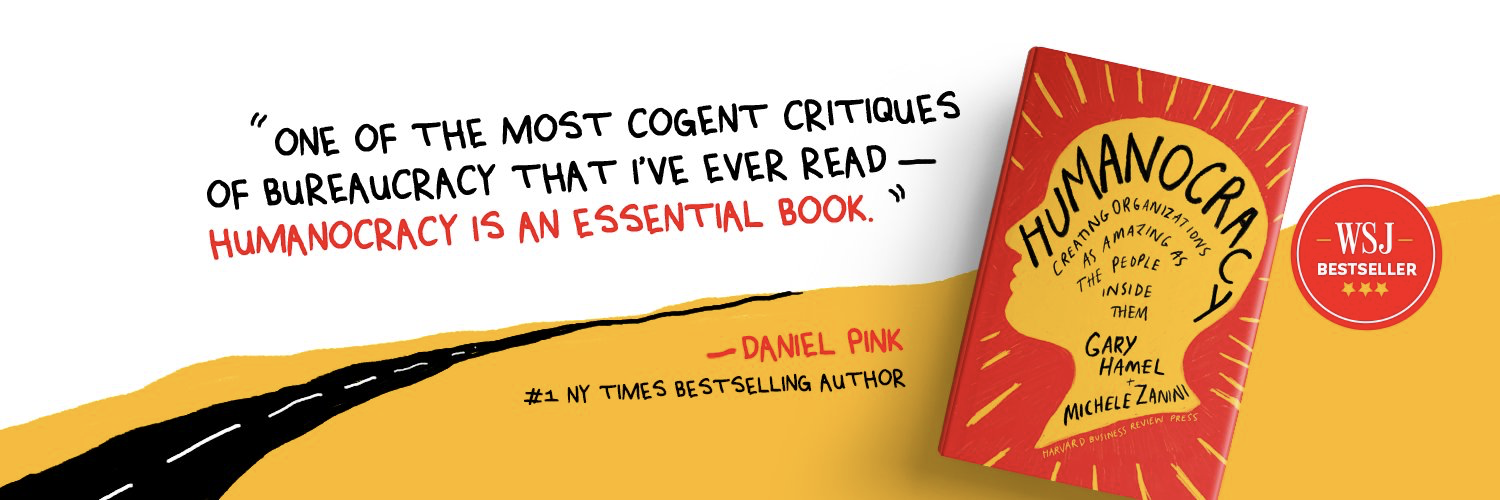
Roger, in a recent conversation about this topic - Daniel Pink made a wonderful comment in my latest book which supports leadership innovation at university and business executive levels – and I’d love to hear more about what you are doing! Until we look more seriously in how we rate innovation – we cannot expect to move beyond broken conventions we once rated as excellent.
Good news is that increasingly leaders in the field have begun to see and help reinvent (or support others who lead change in this area) the rating system itself. Brain research shouts why that is so, even if the results of unfair ratings fail to capture our attention.
Where can I discover more about your innovative work as it melds with neuro related discoveries?
- Log in to post comments
Thanks for your thoughtful insights Luis! We could do so much if interested and experienced people put their heads together to create a system that is honest, makes no assumptions about numbers equaling talent and helps to look for ways to see and value the real talent amazing people bring to the table. It's possible to make talent growth more intelligence fair - and when we do so we'll break out of another glass ceiling that holds back amazing innovation.
We have to first see that it is possible - and in my work I have become convinced there is a far better way to mine and develop brilliance. You?
- Log in to post comments

Ellen
How good to see rating & evaluation getting attention at the management exchange !
I've often found that rating & evaluation systems were suboptimal because they were considered as an independent system, instead of being an integrated part of people development processes in the organisation (but then, of course, people development processes themselves have often been disconnected from strategy)
Another reason for rating & evaluation systems being suboptimal was their very complexity. If they were to serve people development goals, rating & evaluation systems should have been extremely detailed and highly evolving, which they never were. Why ? Well, at least because they belonged within a function (HR) and within systems (ERP) which could not manage such detail and pace of evolution.
When you speak about gems, I am prone to say that real leaders were always able to identify gems in some of their staff, who got promoted. So, in my view, identifying and promoting gems has already existed.
But looking for and identifying gems throughout the organization, to make them work together is much more difficult, even though it is what organizations need if they are to innovate and change management.
I'll stay tuned to learn more about this. Thanks for sharing
- Log in to post comments
Just completed a radio interview on Mita Brainpowered Tools to lead a very different innovation that generates jobs - and thought of our fun interview.
I am crazy busy for next two months but WANT to explore this notion of HOW - which is central to the Mita brain center and central to your work - further together.
Let's keep bantering about how a collaborative initiative can happen profitably - OK? Stay blessed Lisa!
- Log in to post comments

Ellen - Your thoughts here are profound and important for us to mull on for a while and explore. Then act! The idea is a game changer for how we lead and manage. I love Gary Hamel's Mgt 2.0 video, and if you buy into his call to action to build innovation into all levels of the organization then the next logical question (or set of questions) is "how?" One of those how's has to address how we catalyze excellence and best performance. How we spark interest and initiative.
I saw a retweet today from Robyn about Alfie Kohn's work and I think we could refer back to his classic "Punished by Rewards" and further dig into this conundrum. And it is a conundrum because nearly every organization is set up to measure and rate the excellence and engagement right out of talented people.
Let's explore this further!
- Log in to post comments
Thanks I do want to think about your ideas more and respond from a deeper dive! Initially, I did want to say that some of my "rating concerns" come from folks who typed in ratings in 1 to 2 minutes to complete entire list in a blink of an eye.
Some people linked to a post on a blog to describe new concepts as I tried to do with "brainpowered tools" since that is new in leadership. Many of the folks who rated - did not ever go to the link.
Not as criticism - but more as concern for the value of rating as we conventionally do it:-) Great discussion and I will be back with more thoughtful reflections! Thanks Dan and all!
- Log in to post comments

- Log in to post comments
Thanks Dr. McMaster -- you said it even better than me!
It's true - and as I poured over my colleagues' work here for hours - I saw how we lose excellent gems, and knock genius out of the race, by unfair rating systems. MIX is all about examining the structures - so this is just the place to revisit ratings for an exciting new innovation that's gets higher results from many minds!
In collaboration initiatives - evaluation should be novel so that amazing innovation results.
- Log in to post comments

Ellen, by modeling ways to build on peoples' gems of wisdom helps to move them forward. Brain research shows us that when we see the good outcomes we are most likely to make them a reality. If we see the worst we do not achieve all we are capable of.
As we get everyone's talents up and running, more can be achieved. Thanks for your insights and introductions to thoughtful ideas.
- Log in to post comments
You need to register in order to submit a comment.