

James Fishkin & Bobby Fishkin
The Deliberative Corporation

Meet the Winners
We’re thrilled to introduce you to the winners of the Management 2.0 Challenge—the first phase of the HBR/McKinsey M-Prize for Management Innovation.


Click on a winner above to view their entry

Moonshots
Summary
‘Why not?!’ is the motto of Open Government Places.
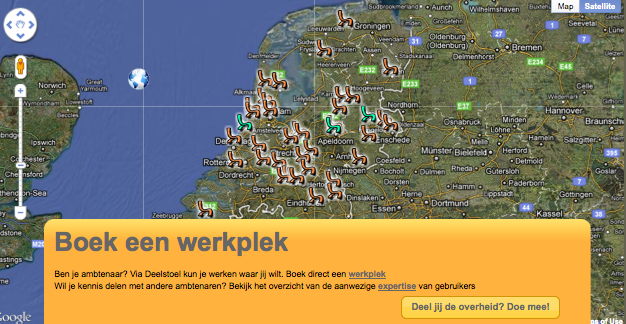
Open Government Places allows civil servants to cut through the red tape, join forces, and share government forward. This project is called Deelstoel in Dutch (‘share chair’) and invites civil servants to ‘hack’ the government and share their workplaces.Government offices are invited to reserve a part of their buildings to be made available to colleagues from other public administrative organizations.
OpenGovernment Places (OGP) targets the viability of interactive Web 2.0 communications, and provides the forum and logistics to align civil servants and what they do directly with the communities they serve. As both an in-person and on-line arena within a real-time dimension, OGP streamlines our way of working and redefines how management and leadership happen. By networking and pooling experience and insights for more effective solutions, Open Government Places accesses existing resources and capitalizes on the obvious!
Context
Open Government Places is a project initiated in September 2010 by Digital Action. Our goal is and remains to work together as communities, which means we all 'own' this avenue of innovation. Civil servants share their offices, knowledge, expertise, and resources through the website www.deelstoel.nl. As of the summer of 2011, we have achieved the sharing of 400 government workplaces within the Netherlands, allowing civil servants to work and access resources throughout the Netherlands, and with a view to the future, around the world.
Triggers
As an employee for the Dutch Ministry, I consistently experienced the frustration of getting through security to access government buildings and facilities, even in the area where I personally worked. In-person access to a government facility typically took more than half an hour to acquire.
It also proved to be more difficult to book a meeting room or workplace in a government building through the Ministry than through an outside booking agency at additional expense to the government. And so I took action in the form of a digital call to action. I sent out an SOS tweet, "Help, we want to work in all government buildings!” that inspired and led to the creation of a government workplace reservation system and booking platform that is characteristic of the real-time presence and common sense solutions offered by Open Government Places and made possible by Web 2.0 management.
I saw that we could use the social media to inform and empower our work as civil servants. Open Government Places exemplifies the power of access now available via the social media to connect and communicate, and thereby move government forward by networking available resources, expertise, and real-time information. We developed a reservation system to check for available workplaces, started a pilot program, designed a logo and website with 99designs.com, and launched the website www.deelstoel.nl.
Key Innovations & Timeline
Open Government Places identifies and accesses existing resources while reducing overhead costs, invigorating communications, and immediately streamlining our way of working.
Open Government Places makes it possible to now:
- access available government office space for convenient scheduling of appointments at no extra cost to the government
- access the expertise of departments, organizations, communities, and individuals contributing to more informed and effective solutions for everyone
- redefine and invigorate the work-style by streamlining and facilitating communications and promoting flexible and spontaneous contact
- support sustainable practices by reducing paperwork, travel time, and CO2 emissions
Workspace Redefined
In effect, Open Government Places promotes common sense collaboration via the social media. This shifts the concept of ‘an office’ as a specific location to a much broader and more accessible realm where people can easily connect to meet, contribute, and work together. Civil servants in the Netherlands are now meeting and working together online and offline across previous organizational boundaries in real-time collaboration on social issues. We are no longer location-bound, and have easy-access to available workplaces, knowledge, and existing resources both on-line and in-person.
Access Expertise
Open Government Places provides an overview of the available services and expertise of participating civil servants within a real-time network. Government workers are now connecting through twitter and the OGP website, generating closer collaboration for more informed and effective solutions and re-energizing the work they do. This shifts the balance of discourse from what we don’t know to what we do know.
Redefine and Invigorate Work-style
Open Government Places connects civil servants and government offices in collaboration throughout the Netherlands and with the communities they serve. We contribute collectively to more ‘present’ governance, while benefiting from greater transparency and accountability. Our motto here is ‘more is more’!
We can all share in the advantage of more space, more expertise, and more flexibility. With a view to the future, Open Government Places invites government offices around the world to participate in moving government forward by networking our knowledge, resources, and communities globally.
By breaking down previous barriers, OGP accelerates communications, feeds the knowledge pool, and drives innovation and adaptability. Increased user-presence boosts overall engagement and spontaneous collaboration across the board. The net result is a shift from the focus of individual ‘ownership’ as defined by specific government buildings and offices to a sense of ‘stewardship’ shared across the spectrum of government. Workers become genuinely engaged in their work, and are free to participate in shaping and steering government, on all fronts. Community members find a door where there used to be a wall, and are able to become part of moving government forward.
Open Government Places introduces ease and flexibility in connecting civil servants and community members with each other. Some people work where they live, instead of travelling unnecessary hours each day. Knowledge is shared across different ‘areas of focus’ and our work is more comprehensively informed. New insights contribute to more effective policy planning. In short, more is more!
Open Government Places also allows participants to achieve a more agreeable life-work balance by providing flexible scheduling options. For my work, I’m ‘on the go’ a lot, and I sincerely appreciate how OGP gives me last-minute latitude in my work. I can now find a workplace ‘around the corner’ on short notice, ‘tweet’ my eminent arrival in an area, and generally increase my availability and ‘presence’ in and around my work. This makes it easier for me to manage my time and connect with others.
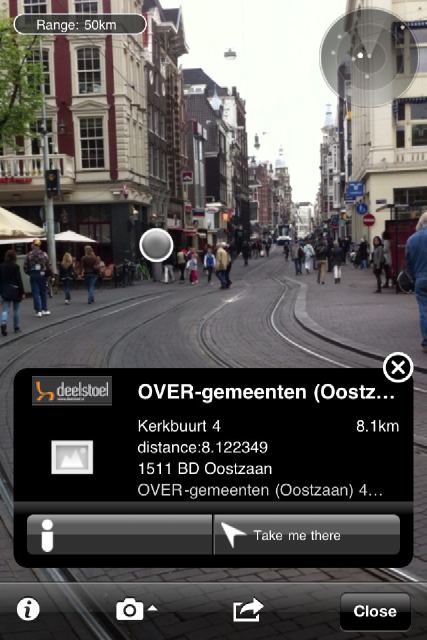
Imagine you are in an area with a couple of hours to spare. With OGP, you can schedule a last minute appointment with interested parties in the neighborhood, or simply access a nearby government workplace where you can use your time productively. Perhaps you would like to spend an hour working while avoiding the height of rush-hour traffic. Additionally, you have the convenience of combining ‘private’ appointments with professional commitments. With your smart-phone, you can check the application ‘layar’ to find a suitable workplace. (http://m.layar.com/open/deelstoel)
Support Sustainable Practices
Open Government Places supports a sustainable way of working. By introducing our workplace reservation system and providing an overview of available expertise, we have effectively reduced:
- paperwork
- the time and cost required to book workplaces and conference facilities
- the time spent wondering who to contact, where to go, and how to get there
- the time spent travelling
- CO2 emissions
- the red tape...last but not least!
Open Government Places makes it easy to connect. Plug-in and share workplaces, wifi, and coffee... and you’re in! Because of the Internet and Web 2.0, it's now possible to organize this kind of dynamic and real-time cooperation without requiring funding. We have a world of possibilities 'at our fingertips’! So, we are now able to invite participants to easily plug in, connect, and share the government forward.
Our platform supports more efficient use of existing government office space. In the best case scenario, 80 percent of government buildings are being used, and in the worst case scenario, it’ around 30 percent. OGP currently lists more than 400 workplaces in government buildings throughout the Netherlands, and civil servants can now easily book a workplace in a government building on-line, and at no extra expense to the government.
Studies show thatif we reduce traffic by 10 percent, the problem of traffic jams is significantly impacted. OGP provides the opportunity to schedule selectively, and contributes to reducing the phenomenon of traffic jams. We have over 1 million civil servants in the Netherlands...’do the math’!
Timeline
We don’t have a timeline, we have experience. Initiated in September 2010, Open Government Places has established it’s presence and impact in ‘the here and now’ of how we share government forward. The timeline for Open Government Places is organic in nature, and best defined as ‘in the present’.
Function Follows Form:
We have provided the form, and our participants effectively define how Open Government Places functions. OGP is a user-generated entity and is not limited by functions of ‘ownership’ or ‘budget’. The OPG project has been initiated free of any required funding, and is self-sustaining. We believe dependence on money and time delay innovation. We didn’t ask permission or spend half a year making plans, we just did it.
Our future goal is to have all government buildings within the Netherlands represented within OGP, as well as to extend our collaboration world-wide. Why not?!
Challenges & Solutions
Open up Government
Initially it was a fundamental challenge to get government offices enthusiastic about sharing their buildings, and opening up their ‘private’ and secure terrain. I shared the idea of opening up workplaces for flexible collaboration at seminars and conferences, and online via blogs and the social media. Civil servants throughout the Netherlands immediately recognized the advantage of sharing their time and space in promoting open collaboration. No one was adverse to the idea of increased flexibility in our work-style, reduced costs, or sharing a broader spectrum of knowledge driving and informing the work of government forward. There was also the added attraction of a reduced carbon-footprint.
Initially it was a fundamental challenge to get government offices enthusiastic about sharing their buildings, and opening up their ‘private’ and secure terrain. I shared the idea of opening up workplaces for flexible collaboration at seminars and conferences, and online via blogs and the social media. Civil servants throughout the Netherlands immediately recognized the advantage of sharing their time and space in promoting open collaboration. No one was adverse to the idea of increased flexibility in our work-style, reduced costs, or sharing a broader spectrum of knowledge driving and informing the work of government forward. There was also the added attraction of a reduced carbon-footprint.
So, we had a great idea, and needed to find a way to make it happen. We started with a pilot program to learn about how we could make it possible for all governmental organizations to work together, and to make our project scalable so workplaces were easily accessible. We needed to compile information on each specific location, and come up with a simple and efficient system for receiving and delivering people to the available workplaces. We had to design the logistics to make it possible to assure that people were in place at each location with the ‘right’ information to facilitate the practical aspects of meeting and greeting civil servants who had booked rooms and escorting them to their assigned workplace. We also had to deal with security issues which vary from building to building. This has been solved by registering visiting civil servants on-line and then issuing them a ‘visitor’s pass’ upon arrival which is limited to particular parts at the building being visited.
It is also important that the OGP experience is pleasant and participants are welcomed and made to feel at home. It is in my interest that guests are satisfied with the services we offer, and that their experiences promote the viability of OGP. We have found that city workers receiving visitors enjoy hosting their guests and the overall experience is one of added value for everyone involved and energizes the work environment. We are now developing a feed that announces the arrival and presence of visiting civil servants who are available to meet with visitors.
We started OGP with small steps, requesting participation from government offices one table, one space at a time in order to convince managers that indeed enough space was available, and to import the idea that it could be easy, even beneficial, rather than problematic to open up government places. We explained that booking is always for a reason rather than random, and that they would have overview of what was happening on their ‘terrain’. It was not a common occurrence at that time to share buildings, workplaces, and knowledge in government areas and we initially met with some resistance, or discomfort with the idea.
I also believe it is important that we have made it easy for participants to join the project. There are no costs are involved. It’s simply a question of sharing workplaces, wifi access, and coffee... and you’re in!
Benefits & Metrics
OPG is fundamentally about a new mindset, namely moving from a perspective of ownership to stewardship. When you share government offices, you open up access to thousands of offices and buildings, new contacts, new experiences and make way for a shift from a sense of individual ownership to shared stewardship. Civil servants are encouraged to share knowledge and think ‘outside the box’. They are more flexible in their work, and no longer bound to their desk or a 9 to 5 mentality...and that’s when great things happen!
We have seen the following impacts made possible by OGP:
- We can do more with less, and that is especially important now, as we face cutbacks on all fronts!
- We can work together wherever and whenever we want, empowering our way of working
- We can share resources in-person and on-line increasing our scope of interaction and making us more effective in our work
- We can increase engagement and satisfaction on the job supporting more effective government policies
Lessons
We have learned from our experience with OGP that the following elements are important in promoting positive change:
- Don't produce a plan and ask for permission, just do it!
- Don't let money or available hours determine your potential
- Work together in communities
- Give everybody easy access
- Encourage outsiders to participate
- Share knowledge via the social media
- Never underestimate the value of experience and human potential
Independent Status
In creating OGP, we were able to bypass the need for funding, be independent of the influence of lobbying or special interests, and conduct a free and open forum with no obligations to parties with vested interests financially. Instead, OGP participants are motivated by their interest for particular group projects and come together out of a sense of passion that makes what we do more spontaneous and effective. Our participants are driven by achievement itself.
Management 2.0 - Retooling Management
Good ideas are based on experience, sharing real knowledge rather than guessing about what might be needed, and group collaboration around an idea. This is the essence of the swarm theory in pooling our resources and collectively working together, and then moving on to the next challenge. A swarm is a movement informed by actual knowledge and experience, and activates the spirit of achievement for those involved. Everyone can contribute their energy, their passion, their curiosity, and their experience. No one is limited by their ‘title’ or position, and natural talents are free to express themselves and inspire each other. This new management style also means no more boring meetings or wasted time. For example, we can conveniently arrange to meet on Skype and invite anyone interested in contributing to share in what is a volunteer endeavor propelled by pure interest on behalf of the participants.
Universal Application
OGP is a platform that is universal in both form and function. We are convinced that its underlying principles of open access and collective management made possible by Web 2.0 can be applied to innovate and invigorate communications, work-style and management supporting all endeavors where working together seeks to empower positive change.
Down to the nitty-gritty... Let’s cut to the chase!
1) Everyone was very interested in you describing how you got this off the ground in more detail: what kind of technology platform did you use--something off the shelf/something simple that you cobbled together, how did you build it without funds? How long did it take to put it together and is this something that could be shared/re-used through something like Civic Commons?
Easy-Design Technology Platform
We used Ruby on Rails as a platform. It's the same technology used by Twitter, Basecamp, the Yellow Pages, Scribd, and Hulu, just to mention a few. The technology is about six years old, so quite mature in Internet terms, fully open-source, and it essentially allows you to put social websites together relatively quickly as compared to more traditional website development methods such as PHP.
A lot of the standard website issues, such as authentication, sending e-mail, and supporting the website with a database, are a breeze with this technology platform. A good comparison would be the difference between standard building techniques versus construction using prefab elements. Ruby on Rails is modular in approach and easy to use, and allows you to share the basic building blocks that you have created with other programmers around the world, which is a clear benefit for projects like ours.
In the past, building a site like this would have taken months, but by using readily available building blocks we were able to realize our website in record times. It took our programmer just 20 hours to put the basic website together, and we spent a few weeks adapting and fine-tuning the site further.
Zero-Budget Website Collaboration
The simple structure and modular building of the website meant that it could easily be shared and re-used by others. The re-usability is what convinced our programmer to create our site on a zero-budget in the first place. He was able to gain programming experience, and re-use most parts of the software for other projects that he might be interested in. So, our work together was motivated by a win-win collaboration.
The short development cycle allowed us to focus on making it a user-friendly website that anybody can use without training. I would like to point out that this is characteristic of most of the Web 2.0 tools available and fundamental to what drives our success forward.
2) What were the obstacles to this process? Many people couldn't believe you could get this done so easily!! I'm specifically interested in how you go buy-in or even trained/communicated how the system worked so, for example, a receptionist in a strange office would welcome you happily when you showed up! Were there any barriers you can address and offer lessons on overcoming resistance?
Pioneering Change - Dissolving Boundaries
- Timing...
- Mindset shift from thinking scarcity to seeing abundance
- Practical issues: access points, security, and availability of wifi
Timing...
The introduction of government cutbacks awakened the interest of government groups in ‘doing more with less’. This was our window of opportunity to introduce an innovative Web 2.0 work-style to the government using a convenient and cost-effective platform. As such, OGP has launched an unprecedented exchange of ideas and expertise, extending the shared working knowledge and engagement of civil servants across the board.
Inter-dynamic communications are transforming the business of government. OGP has successfully challenged the government to open up what was previously considered ‘private terrain’, while offering a new dimension of broad-based engagement and inter-dynamic communications that is invigorating government and directly benefiting society. This new constellation of working relationships is the core acheivement of OGP.
Mindset shift from thinking scarcity to seeing abundance...
Government building administrators and managers are inclined to believe that there is too little workspace and too few meeting rooms available for outside civil servants to share their buildings. However, studies have shown that in the best case scenario, 80 percent of government buildings are being used, and in the worst case somewhere around 30 percent. OGP invites civil servants to reassess the possibilities available to them, and adopt a new mindset that shifts expectations from thinking scarcity to seeing abundance.
It’s the age of access, and we now have the ‘tools’ to move from a perspective of ‘ownership’ to one of ‘stewardship’. By sharing buildings and resources, OGP participants have reshaped the scope of their work, and find they are now in greater control of their specific area of responsibility, and in closer contact with the communities they serve. New knowledge and gained insights refine and extend the quality of governance. In the end, both government and society experience that ‘more actuallyis more’. Sharing responsibilities allows the previous focus on ‘ownership’ to evolve into a sense of ‘shared stewardship’ in reaching our goals together.
Practical issues such as access points, security, and availability of wifi:
Their are no costs involved in joining OGP, it’s simply a question of sharing workplaces, wifi access, and coffee. Most government places have never offered wifi or internet access to visitors, but thanks to OGP, a lot of government buildings now have free wifi available.
We continue to face a number of technical problems because each government organization has its own unique infrastructure. Civil servants can’t work on each other pc’s, most work with outdated web-browsers that are often incompatible, such as Internet Explorer 6, and most civil servants aren’t thinking mobile. They typically go to their office every day from 9 tot 5. A lot don’t have smart-phones, tablets, or even laptops. They cannot enjoy access to a greater selection of government buildings, a broader knowledge base, or more dynamic communications because they are essentially quarantined to their offices. However, we are seeing more and more civil servants who bring their own devices with them, so they are able to work wherever and whenever they want.
Another practical problem is accessing buildings. The first thing you see when you enter a building are turnstiles and security. It would be extremely advantageous to move the turnstiles and security to the third floor so we can work openly and freely on the first 2 levels. It’s counter-productive that interested parties can’t easily contribute to social issues, work together, and learn from each other worldwide because of security requirements at the entrances of government buildings currently limiting access to available resources. In some cases, we have been able to arrange for OGP users to acquire an access card allowing them access to part of the building, or they are greeted by a messenger who guides them to an available workplace, and sometimes there is an open public space available with no security limits.
Open Government Places leaves it up to each participating organization to arrange the appropriate security measures, as all government organizations have their own specific security requirements. Whenever an organization needs our assistance, we are available for a brainstorming session via Skype or by telephone. We also personally visit organizations when needed. Ease and convenience of use are essential to our success.
Internal Communications
When a government organization wants to join OGP, we request that a contact person be assigned for that particular OGP location who will oversee internal practicalities and communications. We facilitate the contact person, and provide support for the use of online processes to ensure convenience and ease in working with OGP.
We recognized early on how important our OGP contact person at each participating organization is as a link to other key people within their organization including the receptionist, office building manager, messenger, and management team. Much of our success has originated from ‘word-of-mouth’ enthusiasm. We make sure our users are ‘happy campers’ who are inspired to motivate support of OGP and spread the word within their organization.
In our contact with municipalities and other government organizations, we emphasize that participation in OGP requires a change of mindset. We advise our contacts not to focus exclusively on getting the approval of management, but rather to promote OGP participation among their colleagues, and let change happen from within. Streamlined internal communications are pivotal to the quality of benefits that OGP participants experience.
And, I’m happy to report that our contacts have done a fantastic job! They have made sure their colleagues are well-informed about what OGP has to offer, and how they can work more closely with a broader network of people and resources. Their personal efforts account for OGP’s smooth start, and the more dynamic and vital way of working that OGP participants now enjoy.
Offer lessons on overcoming resistance?
Keep it Small!
Keeping ‘change’ small makes it easier for change to happen. It encourages participation, rather than scaring people off. People like to feel they are still in charge as they approach making changes. Keep change bite-size and allow participants the freedom to shape and personalize how they contribute.
We point out that they don’t have to share their whole building, and that contributing just a few workplaces is enough to make a big difference overall. If everybody shares a few workplaces, then OGP will have thousands of workplaces to offer. The realization that it only takes a series of small steps to accomplish great success motivates participation. People like to make a difference.
Go Fish!
Throw out your net, and see what comes back! We have learned that a lot of people are willing to help if you simply ask them! They like being part of a movement that speaks to them.
Participants are revitalized by the prospect of contributing to positive change, and they spontaneously promote the OGP experience within their organizations. The ‘human element’ is crucial in inspiring change, both in mindset and in deed.
Just do it!
Do not write big plans, produce piles of paperwork, or anything like that! Save yourself the blah, blah, blah! Instead, we believe you just have to do it! Take action, promote discourse, and search for people with ‘that sparkle in their eyes’, and you’ve already started a movement.
Shared participation is dynamic and delivers both resources and energy in abundance. You don’t have to know everything in advance. Ours has been an exhilarating journey of discovery, and that’s why our MIX submission is a ‘story’. We took the chance, and learned our story along the way. And, we’ve seen great things happen. Capitalize on the ocean of resources waiting to be accessed. Jump in and just do it!
Hold on and keep a stiff upper lip!
As Winston Churchill said:
"Success is the ability to go from one failure to another with no loss of enthusiasm."
- ~ Winston Churchill
Hold on! Do not give up when faced with resistance. Innovation is a tough job, but what did you expect?! Perserverance pays off in the end if your idea is meaningful, and if you bring together the people who find it meaningful. Keep your eye on the ball and your ear to the wall!
3) Could you unpack a bit more of the mechanics of how it works? Maybe some screenshots would be helpful. Is it totally intuitive?
The OGP booking process is pretty straight-forward.
Civil servants book their workplace online via the website Deelstoel.nlhttp://www.deelstoel.nl/
Users of OGP can:
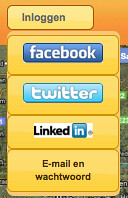
1. Log-in with Facebook, Twitter, LinkedIn accounts, or via their e-mail address
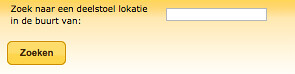
2. Select a place to work - search for a workplace by location
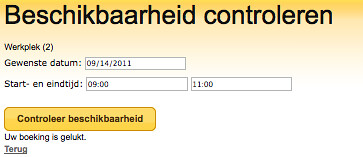
3. Check workplace availabiliy
4. Announce that they are available to share knowledge and experience
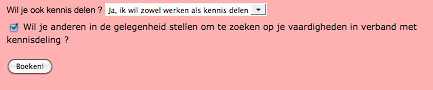
5.View the available skills of other civil servants, for example ICT
With RSS, we can place this overview on the intranet of participating government organizations, so they know who they have ‘in-house’, and can arrange to enjoy a cup of coffee with a visiting ‘guest’ if they would like.
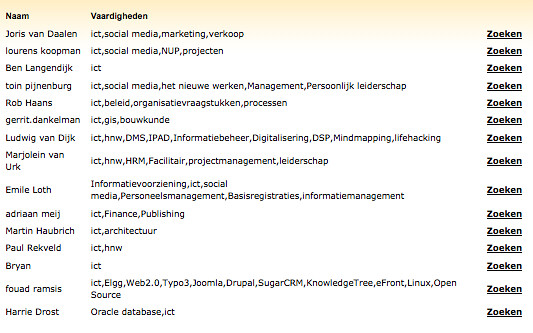
(This is an example of an overview of ICT skills and areas of expertise available.)
6. Follow their booking
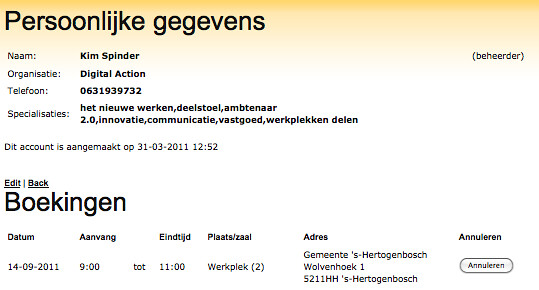
In the near future, we would like to recruit app developers to develop a special OGP app on a zero-budget.
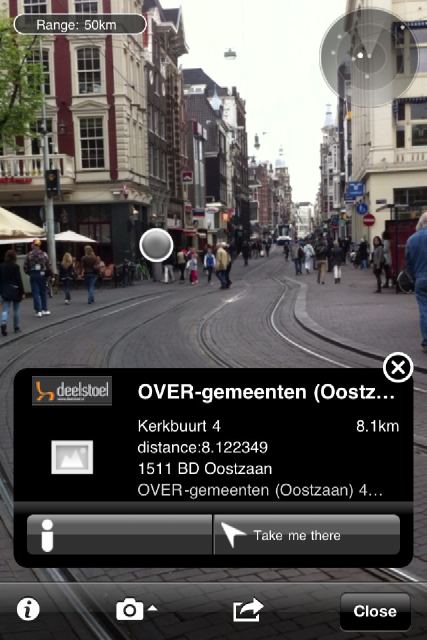
Civil servants can currently use the app called Layar and easily book an OGP location. They visithttp://m.layar.com/open/deelstoel, find the nearest available OGP location, and book a workplace in real-time with augmented reality techniques http://youtu.be/HW9gU_4AUCA
You can also place a widget on your own website and integrate OGP into the system you work with, or alternatively, receive notification of visitors directly via OGP:
Participating OGP locations receive a message when a civil servant books a workplace. It is possible to link the OGP reservation to an existing system within an organization. The OGP system is totally open, and can be coupled with any existing booking system. Most government organizations don’t have their own booking system for workplaces and meeting rooms, so they prefer to send a booking confirmation by email from the OGP database to the person representing the particular participating unit within the organization.
Units register the OGP visitor booking within their own system so the receptionist in question knows in advance who is coming and will greet and welcome them upon arrival. As such, we haven’t need to train people at participating locations because OGP’s reservation system is integrated into their existing systems.
4) Can you describe in more detail how you rolled it out? From the pilot program how did you communicate and involve more and more people and locations? What are the total # of people/locations involved now?
Roadmap
We ran a pilot to streamline and fine-tune the OGP participation process, and make it easy for anyone to join. With the insights we gained, we created a road-map and a FAQ sheet for our contacts to refer to. We also asked our pilot organizations to make a note of any problems we needed to solve, and all the issues they had encountered in making the project scalable.
Step 1 - Preconditions
* Identify how many and which types of spaces could be allocated as shared workplaces. Also, consider access to public areas within a government building such as a canteen or other public use area.
* Is there wireless internet (wifi) available?
* Is there preferably decent, if not delissimo...coffee, tea and mineral water available for OGP visitors?
Step 2 - Decision making
When official authorization for OGP participation is required, we ask participants to request approval from their City Manager or the participating Management Team. We also suggest applicants join the OGP Linkedin group to learn the ‘ins and outs’ of how other civil servants have received internal authorization to participate in OGP.
Step 3 - Practical issues
When requests to join in OGP are given the ‘green light’, there are several practical aspects to keep in mind:
* Who should be responsible for confirmation of OGP bookings within an organization?
For example, the service desk or the receptionist?
* Who will receive and guide the visiting civil servants to the shared workplace?
* Is there a standard security policy such as the issuing of access cards or specific identification requirements?
* Advise OGP representatives to inform colleagues of expected OGP guests so that resident workers are not surprised by 'strangers' on the grounds.
Step 4 - Last but not least...make it real!
We ask our registered participants to leave a trail...
* Sign up at www.Deelstoel.nl
* Send OGP photos of the building, workplaces, and meeting rooms
* Like us on Facebook, follow us on twitter @Deelstoel
* Share OGP experiences on Facebook, Twitter, LinkedIn, Google+
Personal Participation
We are on a crusade to inspire organizations to be enthusiastic about moving government forward. Sometimes we plan ahead for meetings, but most of the time we collaborate spontaneously and on the spot, via Skype or telephone.
A lot of people are attracted and open to the idea of being able to share knowledge, expertise, and new ideas with colleagues from other organizations and members of the community. This engagement infuses organizations with an impulse of new and fresh energy.
We have introduced OGP far and wide on social media, on stage, and on-line, asking civil servants to join us and incorporate OGP within their own organization. A lot of civil servants have done a great job in establishing OGP within their buildings. Through LinkedIn, participants have shared their stories and achievements, so newbies to OGP can directly benefit from their experience.
What are the total # of people/locations involved now?
In total, 53 government offices are represented on the website, offering 554 workplaces. We are growing everyday. We have 200+ individual OGP users, and the most popular locations are the Municipalities of Amersfoort, Hoorn, Zwolle and Heemstede.
Experience OGP
OGP offers beautiful workplaces to be shared. In Dalfsen, you can book the workplace of the mayor;http://www.deelstoel.nl/locations/11 and in Veghel, you can book the office of the city managerhttp://www.deelstoel.nl/locations/2 Have a look and see what we mean! http://db.tt/xIs2NKY
We are growing everyday. The following links share photo’s of OGP in action and will give you an impression of what we have achieved...so far!
The Dutch City Managers Association (VGS)http://www.gemeentesecretaris.nl/ adopted a motion last year to open up at least fifty percent of the municipal government organizations before the Fall of 2011. This adoption was OGP’s first notable success and put us on the map! It also had a priming effect, because everybody wants to be part of a success. In the meantime, we have moved beyond municipalities and have seen provinces, water districts, ministries, and libraries join OGP. Our task is to keep the success rolling by sharing OGP’s achievements wherever possible, and putting up ‘roadsigns’ to the new horizons we have pioneered.
How to involve more OGP locations and reinvent management? You can make a difference! We have taken a few steps that anyone can take!
To start an on-line movement, ask yourself the following questions that we asked ourselves in initiating the OGP project:
- How do I find people who care about this topic?
- How can people connect with this theme and each other, so that they can and will contribute to its success?
- How do I “Step on the GAS”?
1. How do I find people who support my idea?
Envision the goal you are reaching for. Ask yourself, ’Is it topical’? Or, do you think something can be done better and in a more clever way? Share your questions and concerns via social media, public presentations, conferences, or whichever platform you have available. The next step is to make a question encapsulating your idea and ask people to help. Invite input! This is key to keeping the discourse dynamic and directing targeted change forward.
Ask a Question
Ask a question and share it everywhere. Reach out! For OGP, we asked the question “Help, we want to work in all government buildings. Who is willing to help?” The next step was sharing our plea via Twitter, Facebook, keynotes, meetings and public presentations. We also started to write blogs about the topic, and introduced a hashtag via twitter, #deelstoel.
Check your idea by sharing a one-pager...
We wrote a one-page paper introducing our OGP ideas and shared it online. A lot of people responded to the idea, so we knew it was worth trying, and that we were not alone in the assumption that it’s ‘weird’ that we don’t share our workplaces and knowledge.
It’s important to present an informative one-pager. In our case, we have also asked people to tell and explain their OGP story as it has played out within their government organizations. Make sure everybody knows what you need, how they can participate, and formulate your game-plan as a checklist, clear and to the point.
We worked with various criteria:
- Did we get a response to our request? If nobody responds, it’s probably not an good idea, or not the right time for change...
- What kind of wording is optimal to breathe life into our idea, and keep it kicking? We tested the words that people responded to on twitter. For example, the ‘new way of working’ is a hot theme in the Netherlands, so we used phrasing like that to get attention and reach the people we were looking for.
2. How can people connect with this theme and each other, so that they can and will contribute to its success?
* Call to Action
Put out the word! Start with a call to action. Complaining does not directly solve problems. We have seen how active participation opens the door to innovative change. Our goal is to change the world, and benefit from broad-based engagement and collaboration. The participants are the driving force at the core of making something big happen.
When first approached, people are generally willing to join OGP for a short period. If you ask people to contribute for the next 3 years instead of 3 months, most aren’t willing to commit themselves. OGP draws on the energy of ‘change now’. We present a clear and uncomplicated proposition, without making people feel that participation in OGP might somehow ‘suck the life out of them’. Formulate positive alternatives and options, and ask for contributions and suggestions with a view to the immediate future. This is the best way to get people to jump on the bandwagon.
For example, we are shooting for OGP participation by 50% of Dutch municipal buildings within 3 months. The sharing of workplaces by different government agencies exponentially increases the overall rate of connection and contribution. To continue to drive growth, we have zealously communicated OGP actions and successes everywhere, and have sought out the interest of the best people in government who are eager to make a difference, and be part of making the movement happen. As always, we make it easy for organizations and individuals to connect and contribute.
We showcase OGP on platforms such as Twitter, Linkedin, and Facebook, creating a community where people find each other, and coincidence becomes common-place. It’s important as a project leader that you are present, but not in the way. Our focus is on the participant-to-participant relationship. It is critical that participants can freely and quickly communicate with each other. We organise online meetings, as well offline meetings for all participants, so they get to know each other better. These meetings are serious and targeted, but also fun. Never underestimate the fun factor!
How can others benefit from it? and Who can use it?
We suggest that you search for people who are relevant to your project and connect with them. Who has an interest in getting this done? We knocked on the door of any group or organization that we thought might benefit from OGP, such as the trainees of Brabant who are trying to get all government organizations within the province of Brabant on the road with their published wish-list,http://db.tt/dWo35gq A lot of organizations start-up, and then later find they have attracted municipalities around them to join in their effort. So, seriously consider the infectious side of innovation.
It’s important to keep celebrating your success. We share each and every step achieved from the moment a new organization shows interest in OGP, until the moment that organization has joined our ranks. Positive energy generates positive expectations.
Also, when you share success online, participants are publicly recognized and rewarded for their contributions, and in turn, others are attracted to joining the movement. Always give people the credit they deserve, and reinforce the value of their participation. People thrive on recognition, and it inspire others.
Do it together - Making our OGP goals collective ...
OGP invites participants to go beyond their comfort zone, and extend their potential. Do you dare to be vulnerable?
Start a movement from within...
You realize positive impact by inviting participation in creating positive change. Use words like ‘we’ instead of ‘me or I’, and ask for something people can do themselves, or within their own means. We asked people to help us and contribute by lobbying for a minimum of workplaces within their own buildings. They have introduced change themselves, and propelled innovation from within.
That’s the tipping point when a movement happens, and everybody wants to be part of it. OGP is successful as a participation-generated movement. We appreciate that talent is everywhere, and then we accommodate it so that it can express itself. Organize online and offline meetings, and don’t forget to make it fun! The convergence of the group is the vehicle for innovation and more effective problem solving.
3. How do I “Step on the GAS”?
Just do it! Don’t produce more paperwork, but start step by step, and learn as you go.
We use the following model for OGP:
TheStep on the GAS Model - “ Great, Attractive, and Smart ”
Great
The greater the goals, the more people want to join and commit to your crusade. OGP started with an original target of 50 percent participation by government offices in the Netherlands. We are certain we will surpass our original goals because as a community, OGP inspires individuals to dare to be different, and the group to dare to dream. Set your goals high, and you increase the ambitions of everyone.
We have taken a stand on and for Web 2.0 innovation, and witnessed the kind of change that empowers, energizes, and drives governance forward. Now, we want more. We want to go worldwide because we are convinced of the greatness of what we are doing. Our motto has become ‘the more the merrier, because more is more! And, more is better.
Attractive
Does your project invite participation? If your idea speaks to people, they will answer back. Shoot for the first success, and if your idea is worthy, your responses will have a priming effect, as with OGP and the Dutch City Managers Association (Vereniging Van Gemeentesecretarissen).
Everybody loves being part of an adventure or success. It goes without saying that if something happens and it is successful, people want to join-in and create more success.
Smart
Above all, keep it simple.
Connect with your audience on any and all available platforms. Be clear and concise in the message you send.
Make it easy to connect. Be on the look-out for possible snags, and preclude confusion!
Work on a zero-budget whenever possible. Don’t let money become a deciding factor in how your campaign is directed forward.
5) Do you have any thoughts about how this could be scaled and extended beyond government?
First of all, we want to scale OGP as a worldwide concept, not only for government buildings, knowledge sharing and cooperation, but for innovation in the broadest sense. The method we applied with OGP to generate change within organizations, and realize innovation within the workplace was based on web 2.0 tools, transparency from the start, online community building, and collaboration that is scalable beyond the specific focus of government. OGP shows how the principles and tools of the Web can be unleashed to take us further as Management 2.0 evolves.
There is a lot of interest in OGP from major companies and other branches besides government. It is possible to share workplaces and facilities between business and government, and to co-create solutions involving civilians, organizations and civil servants. It would be great to have places where you’re able to work with each other via an online and offline hub on important topics that concern us worldwide, such as education, health care, and quality of life.
Imagine giving back government buildings to the citizens, as an open and accessible resource for all residents. It’s like building new neuro-pathways. As a community, we can work in the government buildings with civil servants, contribute to society, and truly benefit in collaboration with the government offices we support. Companies can join the movement and share places and meetings rooms, and work along side government and communities in creating positive change.
The principles of OGP can be applied to any other sector wishing to launch their own edition of innovative change. It’s a platform based on a simple and modular structure, and is shareable and reusable by everyone. But what makes OGP universally scalable, is the the opportunity it presents to inspire innovation within any forum and reinvent management and how we communicate.
6) Are you the sole "owner" of OGP? Or is there a dedicated team that works on this? Especially curious about how you continue to extend the platform and incorporate learnings. . .
We work with a programmer and an online community of OGP users. We built the platform, but make no mistake, it is the participating civil servants who direct us forward. Participants manage their own buildings on the platform. The contact person is the OGP administrator and can edit his own location on the website.
We are keeping our eyes open for partnerships to help improve the website design, and to develop an app for mobile devices instead of using a web browser. It’s all about getting the right people involved, the rest will follow. We're actively developing an API, and learning from those who contact us with their ideas on data sharing. For instance, we now share our list of government locations with people who photograph workplaces.
We're also working on connecting the software with a variety of internal booking systems that local governments use for their offices. An easy-to-use booking widget has been created which can be easily dropped into their own internal or external websites.
OGP work with existing techniques, like layar. We incorporate learnings by sharing OGP experiences on online communities such as LinkedIn. Through LinkedIn, OGP participants have shared their stories and achievements, so newbies to OGP can directly benefit from their experience.
7) It might also help to share some of the human stories that arise out of people working, meeting, discovering new connections via this platform. Are there any examples of collaboration or projects that have arisen as a result of this new way of working?
The Magic
OGP has a lot to offer civil servants, and government as a whole. OGP harnesses the power of participation and serves as an innovation accelerator, taking the work of government to new heights by connecting people and boosting cooperation all over the country, and hopefully around the world. A lot of people have come together because of OGP, and can now work more closely, and in entirely new ways.
The Basics
OGP gives more freedom to civil servants, who are able to work wherever and whenever they want. It’s now easier to schedule a meeting or fit in a few hours of work at alternative locations. OGP enables more spontaneous cooperation and creates possibilities by dissolving borders.
In closing, here is what OPG (Deelstoel) users have to say:
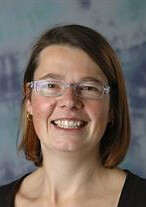
Sandra Minneboo (Waterschap Zeeland / Water Autority of the Province of Zeeland)
“Open Government Places is sharing your facilities and welcoming guest civil servants like colleagues from your own organization.”

Nynke Dolle (Municipality of Achtkarspelen)
“Open Government Places gives small rural municipalities the chance to participate as innovative organizations. At the same time, OGP offers participants the opportunity to easily share knowledge with others.
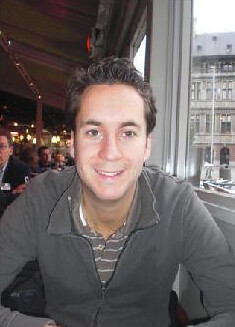
Bart Evers (Ministry of Justice, vm. VNOG)
"Work wherever you want, OGP makes it possible! Stop keeping knowledge to yourself, and dare to share: knowledge and workplaces! "
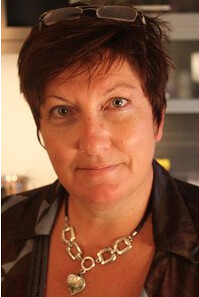
Odette de Koning (Municipality of Rotterdam)
“Open Government Places is optimal use of workplaces beyond organizational boundaries. It opens up the opportunity for us to strengthen and empower each other as civil servants.”

Tomas Ooijevaar (Municipality of Oss)
“Open Government Places is a major step towards a modern government. For me personally, OGP stands for an open exchange of knowledge, and the unification of government organizations.”
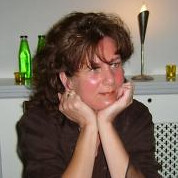
Els Borstelaar (Zeeuwse Bibliotheek / Public Library Middelburg)
“OGP means being able to work wherever and whenever you want, which allows me to use my time more efficiently, and to network beyond the borders of my own organization!”

Francis Leusink-van Milgen (Province of Overijssel):
“Civil servants share for a better government”.
Some comments on twitter:
“Advantageous use of time, networking, and take a look at another organization with reduced CO2 emissions!”
"Book a #deelstoel and immediately share knowledge with colleagues in the country = double benefit"
"Appointment in another city and want to work a little longer? Book #deelstoel and use your time more efficiently! "
* The Energy Department’s review of the positive impulse of innovation that has transformed their work-style since joining OGP.
http://www.energieoverheid.nl/2011/08/OGP-impuls-voor-duurzaam-werken-bij-overheid/\\
“Open Government Places gives an amazing impulse for a more innovative public sector.”
Municipality of Pijnacker-Nootdorp
http://www.pijnacker-nootdorp.nl/134913/OGP,_volgende_stap_in_Het_Nieuwe_Werken_%28HNW%29
“Open Government Places is the next step towards a smarter working government”
Any questions or comments? Give us a ‘tweet’...you never know where it might lead!
Credits
I would like to extend my thanks to Digital Action, Roger Heykoop, VGS, a multitude of civil servants, governmental organizations, and especially our pilot partners, ICTU and the municipality of Veghel.
Images

September 19, 2011 at 1:10pm
Great hack! Communities, coworking, mobility, NWoW, etc. Congrats! There's a lot in here... @cdn
- Log in to post comments
You need to register in order to submit a comment.