

But this definitely isn’t the way things work in the Wikimedia world. The Wikimedia Foundation doesn’t think of itself as the top dog, but instead refers to itself as serving and supporting Wikimedia’s 70,000 monthly volunteers. It takes guidance from them.
In addition, the Wikimedia Foundation is tiny. Only about 50 employees support the fifth most popular family of websites on the planet; more than 500 sites in 270 languages. In addition to Wikipedia (the flagship site), the Wikimedia Foundation supports a host of other projects including Wiktionary, Wikinews, Wikiversity, Wikisource, Wikiquote, Wikispecies, and Wikimedia Commons (the world’s largest repository of freely licensed media files).
In early 2009, Sue Gardner, executive director of the Wikimedia Foundation, decided that, if the foundation wanted to develop a five year strategic plan, it needed to do so in the same way that almost every other project works at Wikimedia: as an open, collaborative effort in partnership with the mostly volunteer Wikimedia community.
There was no way the Foundation’s small staff could support a traditional strategy process; it would take something different. In addition, there were few resources to spare; the Foundation would hire just two people to support this process.
Two of the co-authors of this story, Eugene Eric Kim and Philippe Beaudette, were deeply involved in the Wikimedia strategic planning project. Eugene, of consulting firm Blue Oxen Associates, was engaged to design and lead the mammoth effort, and Philippe Beaudette (now the Head of Reader Relations for the Wikimedia Foundation) was asked to serve as facilitator. Neither was a stranger to wikis or to Wikimedia. Philippe had been a Wikipedia administrator for years. Eugene is one of the world’s experts in how to use wikis and collaborative editing to support community change and growth.
Some context from the Wikimedia strategic plan:

“In recent years, despite continued growth in articles and readership, the Wikimedia editing community has plateaued near 100,000 active editors.Our work is both unique and new, so it is not yet clear whether those numbers will prove sufficient to sustain mature Wikimedia projects such as the English or German Wikipedia.It is clear, however, that the less-mature Wikimedia projects will struggle to grow further, unless their pool of editors expands.
Large segments of the world’s population do not edit the Wikimedia projects proportionate to their real-world numbers. The people who write the Wikimedia projects are disproportionately male, young, and from countries in the Global North:
- Four out of five editors are male.
- Half are under the age of 22.
- Four out of five edits come from countries in the Global North.”

A Wikimedia user (who like many others uses a pseudonym - in this case “FloNight”) said it well:
“Women and other under represented groups will need to be invited/recruited, and the culture of WMF projects will need to be adjusted to accommodate them when they arrive. It will be important to acknowledge the discomfort that current users will feel when proposals are made for changes. And we need to help everyone adjust to the idea that changes are truly needed in order for WMF to accomplish its mission.”
It was with this context in mind that the strategic planning team began its work.
In order to understand how and why we designed the process the way we did, you first have to understand two commons misconceptions about engaging your stakeholders, whether they're an international cohort of grassroots volunteers or the employees in your company.
People participate in Wikipedia and its sister projects because they find it compelling. Even though we knew we were starting with community of passionate, brilliant people, we also knew that if they didn't find a strategy process compelling, they wouldn't participate.
- Finding effective ways to get people's attention
- Inviting people to participate, paying close attention to how we invited them
- Chunking participation into clear, discreet asks so that it was as easy as possible to participate
- Modeling transparency and openness, even if it meant making mistakes very publicly
In total, more than 1,000 people contributed to the Wikimedia strategic planning project, writing nearly that many proposals to meet the community's challenges and priorities. These volunteers created over 1,500 pages of new content in 50 languages. Since a strategic planning project with just a normal-sized team is often a challenge, you can imagine how difficult it was to effectively corral 1,000 people to complete a strategic plan.
The team began the project by openly soliciting ideas from community members and were quickly overwhelmed with proposals. Some were big, bold strategic ideas. Others were small and tactical.
Soliciting ideas from the community up front was the smartest thing the team did during the project. It got people involved and into the concept, and at the same time it gave everyone a solid sense of what the community as a whole was thinking.
Making sense of 1,000 proposals in 50 languages
It would have been impossible for such a small team to figure out how to use all these ideas. So the team didn’t try. Instead, it was left up to the community to make sense of those proposals. The community came through, as it would many times, categorizing and discussing the many proposals.
With all of these ideas out in the open supplemented by research published openly by The Bridgespan Group, the next step was to encourage the community to take a deep dive into critical topics. So the team put up a banner on Wikipedia requesting help. Almost 400 million people around the world visit Wikipedia every month, and soon the banner drew in an additional 1,000 volunteers, each of whom provided biographical information and described the skills they brought to the table (Philippe developed the word cloud below to illustrate the skills of the participants as they described them).

The team organized a series of task forces around subjects like community health, international expansion, and technology strategy. True to the Wikipedia model, all the work of these task forces was completed transparently, in the open, on the wiki. Anyone in the world could see, become involved in, and yes - criticize - the work of the task forces. There were no secret or closed meetings. Weekly reports were public. In addition, each of the task forces was led and manned almost entirely by volunteers, and these volunteers did nearly all of the work analyzing the proposals.
The organizing team helped identify the core contributors for each task force, but anyone could participate in any task force that interested them. While they were supported by professional facilitators, the community members themselves were accountable for the success or failure of their task forces. Not every task force was a success. In the end, each group analyzed all of the proposals relevant to its area and presented a set of recommendations summarizing their findings.
Synthesizing these recommendations into one strategic plan was the hardest part. The team had to take all of these great ideas and figure out which of them were actually feasible.
Keeping it public at every step
Most strategic planning projects turn into private, closed-door affairs when the team begins to synthesize its ideas. Not this one. Even this phase was a transparent process -- everything was available on the wiki, including early drafts.
The brainstorming, deliberation, and synthesis were completed late last year, and the result is a five-year plan that you can now download.
- Problem: How do you get so many people to volunteer their time over such a long time period?
Solution: Recruiting participants was without question the hardest challenge of this process. Despite Wikimedia’s active, international, online community, this was not a build-it-and-they-will-come situation. Philippe and Eugene spent much of their time figuring out how to engage volunteers and then actually reaching out and recruiting them. A huge part of this was focusing on relationship-building, simply spending time with volunteers, getting to know them as people and discussing critical issues. One interesting lesson: even in an online community like Wikimedia, face-to-face contact matters. Philippe spent a lot of time in the air talking to Wikimedia’s international partner organizations, the Wikimedia Chapters, who are responsible for advancing the Wikimedia mission within their geographic area. Their support was key, and Eugene and Philippe identified that up front. - Problem: How do you ensure a diverse, representative set of participants?
Solution: The actual number of participants wasn’t as important as ensuring that they represented both the existing community and the constituency that Wikimedia aspired to serve. Again, there was no magic solution other than good old fashioned pavement pounding -- actively recruiting widely and not simply settling for whomever showed up. - Problem: Not every task force was created equal. Some came up with better, more detailed, more thoughtful proposals than others.
Solution: This was an intensive process, and the team was asking for a lot of time from our volunteers. In the case of the Task Force process, the team probably asked for more than people had to give. In retrospect, it would have been valuable to simplify the number of Task Forces and distribute the volunteers more evenly.People naturally gravitated toward certain topics, such as Wikipedia Quality and Community Health. Those conversations took on a life of their own and resulted in a rich set of recommendations. Other groups languished, and we tried desperately to turn those groups around. In several of those cases, we were largely unsuccessful. In the case of the Local Language Projects Task Force, a user named Dafer45 turned up out of nowhere to turn those Task Forces around. No one knew who he was or where he was from, but he was galvanized by the strategy process and this Task Force in particular, and he almost single-handedly transformed it from one of our weakest Task Forces to one of our best.
- Problem: How did the community narrow down almost a thousand proposals into 14 focused task force topics so quickly?Solution: It didn't. It certainly helped by clustering the proposals into topics in ways that we would never have been able to do, but we weren't able to get people to boil the ideas and research down into a focused set of key questions. So we did that work. The vast majority of our volunteer participants had never participated in a strategy process before and were not naturally strategic thinkers, so they had trouble picturing what that synthesis needed to look like. In fairness to them (and as many people complained), had we allocated more time, they would have figured it out. But we didn't think it was important enough to push the timeline back.
Solution: It didn't. It certainly helped by clustering the proposals into topics in ways that we would never have been able to do, but we weren't able to get people to boil the ideas and research down into a focused set of key questions. So we did that work. The vast majority of our volunteer participants had never participated in a strategy process before, so they had trouble picturing what that synthesis needed to look like. In fairness to them (and as many people complained), had we allocated more time, they would have figured it out. But we didn't think it was important enough to push the timeline back.
Here's the critical point: It's not so much about giving up control as it is about sharing it. Our team was experienced at doing strategy, and while we focused on creating the space for others to contribute, we participated as well. We were not being authoritarian in doing this. We said what we thought were the critical questions, and we encouraged people to self-organize around different questions and topics. If a group had wanted to self-organize around a topic that we thought was not critical, we would have raised our eyebrows, but we still would have encouraged it. Guiding the group also meant letting the energy go where it wanted to go. As we might say in the open source world, we encouraged forking. We simply asked that people do their work openly transparently, so that anyone could participate and everyone could learn from them.
Our nightmare scenario had been that when the process was complete, people would be up in arms about the result. Would people agree with the strategy? Were 1,000 participants out of an active contributor base of 70,000 representative enough? Had we truly lived up to our goal of doing strategy the wiki way? Would the masses simply ignore the results, or worse, protest them?
Here are the strategic priorities and foundation targets for 2015 from the plan that came out of the work of the 1000 volunteers:
Wikimedia Strategic Priorities
- Stabilize infrastructure
- Increase participation
- Improve quality
- Increase reach
- Encourage innovation
Wikimedia Foundation targets for 2015
- Increase the total number of people served from 400 million per month to 1 billion
- Increase the number of Wikipedia articles to 50 million
- Ensure information is high quality by increasing the percentage of material reviewed to be of high or very high quality by 25 percent
- Encourage readers to become contributors by increasing the number of total editors per month who made >5 edits to 200,000
- Support healthy diversity in the editing community by doubling the percentage of female editors to 25 percent and increasing the percentage of Global South editors to 37 percent
Wikimedia Strategic Plan from Victor Grigas on Vimeo.
This famous open source community adage even holds true for strategic planning. While you may not be able to go as far as opening your strategic planning project to the outside world like this team did, you can certainly involve more people inside your organization. The more people you involve, the more great ideas you'll collect.
The product isn't just the strategy, it's the sense of community you'll create.
While great ideas and a great strategic plan can come out of an open process, don't view the plan itself as the only outcome. By asking people for their ideas and involving them in the process, you encourage them to have some "skin in the game." When people see their own ideas and work reflected in the strategy, they'll be more apt to take ownership and ensure it is executed well. Rather than implementing someone else's plan, they'll be implementing their own.
If you go open, stay open.
If you open up your process for ideas, but don't let people contribute to the creation of the plan itself, you are really just crowdsourcing ideas. By giving your contributors key roles not just in coming up with ideas, but in the construction of the plan itself, you'll show them trust and respect, and receive it in return. Wikimedia put volunteer contributors in lead roles and many of these people continue to run a follow-on project named strategic action.
Clearly define the process up front.
We could have done a better job planning for what would happen next after receiving the initial barrage of proposals (a fact the community reminded us of mercilessly). Plan out your project as a series of manageable phases, each with a clear end point and output, and communicate that plan. Contributors will be eager to know where and when they can contribute best. By clearly defining the process, you'll be more organized and show respect for their time and effort.
Leave room to explore uncharted territory.
But don't be too rigid. Sometimes great ideas for how to move forward with the strategic planning process will emerge from the community itself. By being flexible and incorporating contributors' ideas not just into the strategic plan but the process itself, you'll not only improve things, you'll ensure that people stay engaged and interested along the way.
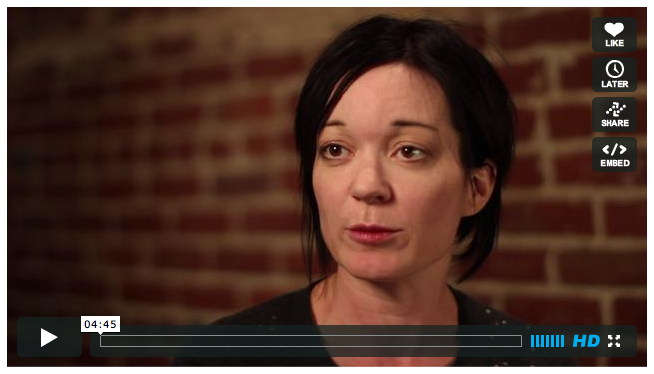
- The Wikimedia strategic planning project video, featuring Sue Gardner, Philippe Beaudette, and Eugene Eric Kim
- The Wikimedia strategic planning website
- Chris Grams article on the project for The MIX and for Fortune
- Chris Grams original article on the project for opensource.com
- Can You Open Source Your Strategy article from Harvard Business Review


This is an inspiring and a remarkable benchmark that would-be innovators must study if they want to promote corporate strategy as everyone’s business. I especially love the lessons' section
- Log in to post comments

Very helpful story. I'm often asked how transparency and involvement can actually exist and the organization still get things done. This story shows how with compelling bits of data.
- Log in to post comments

What an interesting project! The lessons learned and benefits/metrics to monitor progress are so interesting, given the unique context of WMF and its goals.
I remain however with a few outstanding questions. I wonder if the challenges/solutions section might benefit from a more elaborate description of how you identified WMF's target audiences. Did you seek out or establish networks of volunteers? How did you leverage the work of friendly organizations? Are the volunteers are committed to growing Wikipedia?
Regarding lessons learned, I am not familiar with the "bugs are shallow" adage, some description here would be terrific! Also, it seems like the need for face time should be presented in "lessons learned" as well - it is an important one!
Bravo on this accomplishment!
- Log in to post comments

Sounds like a marvelous and sometimes difficult process.
Wikipedians, in parallel with many other organizations that are learning how to work openly and develop their own models of governance, are developing the tools for the next generation of civilization.
I don't mean that the next civilization will need a big encyclopedia. I mean that the process of building something of that sophistication will become a lesson and model for generations to come. You're resetting what humans thing the Mobb is capable of doing, and you're leaving behind the operating manual for how to do it.
This project is the latest iteration in this quest, and is a very explicit effort to bring Wikipedia back to the roots of what make it great and useful. Bravo!
- Log in to post comments

I'm in strategic planning for more than 20 years and that's the first time I see a so interesting and successful bottom-up experience.
I keep it like a model even if I prefer designing a vision with the leaders before involving so many peoples.
Congratulations to those involved in this project and particularly to Eugene and Philippe.
- Log in to post comments
I like the write-up and the ideas behind it. One thing I would do would be to make this sentence stand out more, as it is the essence of your approach:
Soliciting ideas from the community up front was the smartest thing the team did during the project.
Good luck!
E. Feinler
- Log in to post comments

This year-long process was a true inspiration, and I'm honored to have played a small part.The world of Wikimedia is complex and ever-changing, strongly influenced by thousands of small innovations by dispersed innovations. How else could an effective strategic plan be produced? The input of a diverse and extensive collection of stakeholders was essential: a top-down plan would almost certainly have been ignored by the volunteers who make the decisions. But to conduct a process involving 1,000 people of different backgrounds was an impressive feat; Sue is not kidding when she says "it could have been a disaster!"
The result, however, was far from a disaster: it was a clear and intelligent expression of the volunteer community's will. It will guide future efforts in many important ways. Bravo to the team that pulled it off!
- Log in to post comments
You need to register in order to submit a comment.